
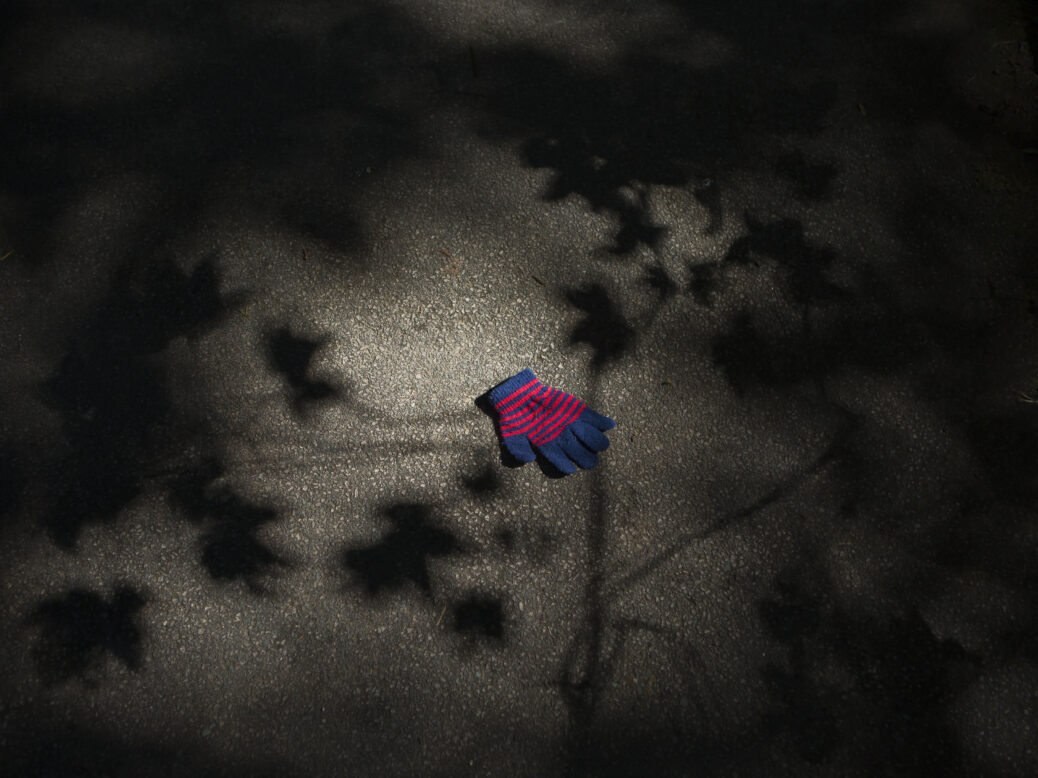
On 20 December 2024, a handful of people filed into the coroner’s court in Chelmsford for a short hearing. They were there to mark the official end of the state’s involvement with Hailey Thompson’s life.
“It was a documentary inquest,” explained Daniel Rees, the court reporter who attended from local paper The Daily Gazette. “Documentary inquests can be as short as five minutes. Sometimes they can be 15 minutes, but they’re never particularly long,” he said. The coroner and their officers had all the information they needed to ascertain how Hailey Thompson died and there was nothing more to be said – at least officially.
The five-month-old passed away on 2 April 2024. She and her parents were living in temporary accommodation provided by the local council. However, they were all sharing a bed as no cot had been provided for Hailey to sleep in, contrary to guidance issued by central government just a month before her death. Still, no cause of death could be determined by the post-mortem, and the coroner had to record an open verdict.
“The family had initially indicated that they were going to attend,” Rees continued, but the coroner said on the day that they had received an update to say the family would not be in attendance, which is also quite normal. It’s quite common for family members not to attend documentary inquests.”

Hailey Thompson was one of 80 homeless child deaths that were recorded in temporary accommodation between October 2023 and September 2024. In addition to this, there were 64 stillbirths and 27 neonatal deaths to mothers living in temporary accommodation throughout 2024. The National Child Mortality Database has concluded that temporary housing was a cause in the deaths of 104 homeless children from 2019 to 2025.
Most of these deaths were and are never reported in public, unless they were the subject of a criminal investigation, or if a court reporter such as Rees happened to attend the inquest.
The New Statesman has examined 20 deaths of children (under 18s) who were homeless when they passed away to try and tell the stories of how they lived, how they died and how to prevent such deaths in future. To do this we used a list collated by the Dying Homeless Project, a part of the Museum of Homelessness, which produces an annual report based on Freedom of Information Requests to local councils asking for details on any homeless deaths within their jurisdiction. The data is incomplete; many councils did not respond to requests for information or simply do not hold information about the deaths of people experiencing homelessness, according to the Dying Homeless Project.
The deaths we are looking at took place from 2019 to 2024, across England, Wales and Scotland. The eldest child was 17 when they passed and the youngest was 28 days old.
Cot death and Sudden Infant Death Syndrome (Sids) are the most common causes of death among homeless children. Homeless children under one are at the highest risk, comprising 58 of the 74 deaths of children in temporary accommodation between 2019 and 2024.
“When we’ve looked specifically at unexpected deaths [of babies], it’s that high proportion that are living in much more deprived conditions,” said Jenny Ward, CEO of the Lullaby Trust. “It does mean temporary housing, it does mean overcrowding, it does mean damp conditions.”
In 2025 there were at least 5,683 babies and infants who were living in temporary accommodation or emergency housing such as a bed and breakfast or hostel. There were at least a further 5,320 children aged between one and two living in the homeless system. This is according to Freedom of Information requests filed by the New Statesman with councils in England (317 councils), Wales (22 councils) and Scotland (32) – plus the Northern Ireland Housing Executive. Two-thirds (284) of these local governments responded.
One of the ways to prevent cot deaths is providing safe spaces for infants to sleep, usually in a cot, and advice for parents on “safe sleep”. Councils have been required to provide a cot to homeless families since March 2024, when the government changed its guidance. However, the responses to the New Statesman’s Freedom of Information requests reveal that at least one in ten councils are not providing cots.
More councils leave it to providers of temporary accommodation or only do so on request, placing the onus on a newly homeless family to understand what they need and to ask for it. Three-quarters of councils also currently do not provide any type of “Safe Sleep” advice to help homeless families ensure the safety of their children, according to the Freedom of Information Requests.
Ward says that councils should be proactively asking whether babies have a safe space to sleep, adding that many families in crisis focus on immediate priorities such as nappies unless they are being asked about safe spaces for sleeping. “I think it is having those conversations from day one, not waiting for someone to say it, because it might not be their priority on that given night and they might not realise where they’re at high risk,” Ward said.
Cots and advice, however, cannot protect homeless children from other hazards in their home. Irah Best was born on New Year’s Day 2023 and never saw February – she was 28 days old when she died. Her family were temporarily housed by Salford Council, where her parents had moved to six weeks before she was born. The cause of Irah’s death was officially recorded as unknown, but the inquest found that a “sump pump” (a device used to prevent flooding) in the flat was contaminated with sewage and had high levels of E.coli. “Irah’s parents did everything they could for their daughter, determined to give her ‘the best possible start in life’. They did nothing wrong,” said the coroner at the end of her inquest.
Aalim Ahmed was five when, on 16 May 2024, he fell out of a window on the 15th floor of a tower block in east London, which his family had been temporarily placed in by Newham council. His mother had reportedly complained to the council about the window prior to his death, which she said could be easily fully opened by pushing a button. Aalim’s death was the ninth in six years of children under 11 who fell from a balcony or window in social housing, raising questions as to the suitability of housing any small children at such heights. Ahmed’s inquest is still ongoing at the time of writing, with public hearings yet to commence.
Isabella Jonas-Wheildon was a two-year-old who loved visiting farms and the zoo, described by her family as “perfect in every way”. That life ended when Scott Jeff, her mother’s new partner, beat her to death and days later dumped her body in a locked bathroom. The pair had left Biggleswade in Bedfordshire with Isabella and tracked across four counties, attracting the attention of the authorities and agencies in each, before Isabella was murdered in Ipswich.
“What leapt out at me was this spaghetti of different public authorities that had input or an involvement in Isabella’s care and safeguarding,” said Matt Precey, the BBC journalist who covered her death and the subsequent murder trial.
At one point, when the family were living in a tent on the beach in Great Yarmouth, a passer-by stepped in. “I remember being struck at the time by the fact that it was a member of the public – childcare, child protection background – who actually took positive action here, who actually intervened and tried to do things to help and support this family in a way that the authorities failed to do,” Precey said.
The Child Safeguarding Practice Review into Isabella’s death details the missed signs of abuse made by multiple professionals, including a police officer who visited the family when they were living in the tent. “Nobody took ownership,” said Precey, “You would like to think there’d be somebody senior who saw this, because bear in mind that Isabella’s mum’s wider family, her grandmother, had raised concerns, and nobody took the initiative to focus on Isabella and make sure that she was all right.”
Deaths by abuse are the most visible homeless children’s deaths. Victoria Marten-Gordon, whose death by hypothermia was a result of neglect by her abusive parents who went on the run following her birth in order to prevent Victoria being taken into care, filled more column inches than every other death we looked at combined. In the cases of both Isabella and Victoria, homelessness – moving from place to place – facilitated and enabled the abuse that led to their deaths.
As a younger child, Ben Nelson-Roux was a curious and energetic boy who would ask “1,000 questions”. He was a prankster who once sellotaped his gran’s favourite cup to the ceiling (it was retrieved without damage). “Ben was fascinated by everything,” said Kate Roux, his mum.
“[Ben] really struggled with mental health issues long before he started struggling with drugs, and had all sorts of problems with school,” Roux continued. In addition to these challenges, Ben was also being groomed by county lines drug dealers. “It was just endless, endless crises. It just became constant, constant, constant firefighting and no strategy to actually help him,” Roux said.
Her efforts to keep Ben at home could not meet his needs and there was a stream of visits from social workers, ambulances and the police. None had a solution for the family. “It reached a point that I asked social services to take him into care, because I couldn’t keep both my children safe. Just couldn’t do it. And they didn’t take him into care because he was 16,” Roux said.
Ben went into the Nightstop Service, where hosts provide emergency accommodation for short stays, but it was not a solution for someone with his needs and he was soon ejected for breaking the rules. He was then placed in a homeless hostel intended for adults, which Roux said was “a terrifying place for anybody. And they put a child in there.”
She is scathing about the actions and inactions of social services. “I supported Ben with food/laundry/showers/bus tickets etc the whole time he was ‘in care’. Social Services would have let him hit unimaginable lows without family support,” Roux said.
Days later Roux took Ben to hospital following an overdose. He was discharged from A&E without any blood tests and went back to the hostel. “Ben insisted on hugging me goodbye, and I gave him the wrong hug. I gave him the ‘oh, what are we going to do with you?’ hug instead of the ‘I love you so much’ hug,” Roux said.
The following day, Ben’s mental health spiralled and his mum was desperately trying to get him sectioned or into safer accommodation. Eventually she managed to get a private psychiatrist to do an assessment over Zoom the next day. But when she arrived to pick him up, he had passed away. It was 8 April 2020. No cause of death was able to be recorded as none of the standard procedures were followed. “The DI at the scene argued strongly for protocol to be followed and was told samples would be taken by the coroner. The coroner assumed (in writing) that it was a deliberate overdose. The family has never had an explanation or an apology,” she said.
Roux says that Ben and people with needs and complex issues like his are treated differently. “People that take drugs and people that are homeless are just not seen as proper people,” she said. “They are human beings. And he was a child.”
“[During the inquest] The manager of the hostel stated that nobody had asked any questions about previous deaths and so she destroyed her notes about Ben’s time in the hostel,” she said. “It is normal for these deaths to be completely ignored.”
Roux wants to see a ban on children being placed in adult homeless hostels (something the coroner also concluded in their Prevention of Future Deaths report), adding that there need to be more foster carers, care homes, places and people trained to support to meet the needs of young people with complex needs such as Ben. The ban needs to be put in place before the situation reaches a crisis point, she said. She is part of the campaign led by INQUEST for a National Oversight Mechanism to enforce the recommendations made by coroners. “The thing that really sticks the knife in, is there’s no interest in looking after the next Ben. And I don’t know how many families before Ben would have read about him in the paper and gone, or ‘why didn’t they learn from our child’s inquest?’” she said.
“Homeless children are hung out to dry by the system,” she said, pointing to two of Ben’s friends who she says were left alone in a hostel by social service when their father moved out. “This is not ‘a one-off’, or ‘Covid’, or ‘exceptional circumstances’: this is routine, systemic failure of vulnerable children,” Roux said. “I’ve never met anybody like [Ben]. We shared so many books and with music stuff we did together – he was amazing.”
16- and 17-year-olds who become homeless are uniquely vulnerable. They are less likely to be placed in foster care but are more likely to need services which are under acute pressure, such as child and adolescent mental health services (CAMHS) and drug and alcohol services. In 2023, the charity Coram Voice accused councils of “tricking” thousands of young people into cheaper hostels over going into care by not providing them with the information for them to make an informed choice.
Nela Grinberga died by suicide in a homeless hostel in Newport on 1 October 2021, aged 17. Her two-page inquest report notes that she was originally from Latvia and had a “troubled childhood” and, as an older teenager, she struggled with her mental health and used cannabis. Two days before her death Nela went to see her GP about panic attacks and she was referred to a mental health appointment on 12 October.
Nela’s online footprint is light. There is a YouTube playlist in her name, created in 2018 when she would have been 14. It includes Rihanna’s song “Diamonds”, a remixed version of the Fugee’s “Ready or Not” and Sonta’s “You ain’t Shit”.
Mackenzie McKnight died on 14 September 2024, aged 16, in temporary accommodation on the Shetland Islands. Mackenzie’s mother, Laura, lived in Glasgow nearly 400 miles away and had to launch a crowdfunder to raise money for her to travel to say goodbye and for a headstone. People donated £1,775 (£775 more than was asked for), with one anonymous person giving £200. There was no Fatal Accident Inquiry (the Scottish equivalent of an inquest) into Mackenzie’s death.
Ciara Bartlam is a barrister who focuses on inquests and inquiries, but was previously a specialist homelessness officer working with young people. She represented the Roux family at Ben’s inquest in 2022. “The issues [for 16- and 17-year-olds] do just come up time and time again in terms of access, particularly self-inflicted deaths, the access to safeguarding and support – it is just the same time and time again,” she said.
Every child under the age of 18 who dies will have a Child Death Review, which is led by a paediatrician and will usually include everybody that was involved in that child’s day-to-day life. “What they may do through that process is they may identify issues of concern that are wider than just this individual, but they’re not really set up to examine safeguarding practice in detail. It is just to look at what’s going on here – anything particular that we need to bring to the coroner’s attention? Do we have any major concerns that might affect other children at this moment in time?’” Bartlam explained. Child Death Reviews are also not public documents and cannot be requested under Freedom of Information laws.
“Every one of these deaths should be seen as a national tragedy. We should have good data on what happened and what’s going to be done to prevent it from happening again,” she said, adding the deaths of people experiencing homelessness should be subject to a higher level of scrutiny.
Deaths that appear to be from natural causes are difficult to challenge and to get the coroner to investigate, Bartlam said. And even if families are able to do this, they would need legal support in order to help them advocate and this is not necessarily available to them. “Bereaved families may often feel nervous about participating in a coroner’s inquest, particularly where their child was experiencing homelessness, because there’s such a stigma around that, and also because of a fear that they will get blamed,” she said.
When I showed Bartlam the inquest report from Nela Grinberga’s case, she pointed out that the coroner used a Section 9C provision in the law introduced in 2022 to reduce court backlogs – meaning there was no final inquest hearing, only on papers. “Section 9C is only supposed to be used where there is no public interest in having a hearing,” she said. “Even if Nela’s family did agree to an inquest in writing, it is difficult to understand how a coroner could reach the decision that no public interest would be served by having a hearing in circumstances where a young woman appears to have taken her own life while she was particularly vulnerable and receiving support from the state.”
“I have seen firsthand how overstretched and fragmented this system has become. Basic safeguards are being missed, guidance is ignored and there is no clear accountability when things go wrong,” said Siobhain McDonagh MP, chair of the APPG on Temporary Accommodation. She added that each of these deaths should be “treated as a national failure” and that there needs to be “clear data, full investigation and urgent action” on improving conditions and reducing the number of children in temporary accommodation.
When we put our findings to the Ministry of Housing, Communities and Local Government, they issued a response from an unnamed spokesperson.
“The death of any child is devastating, and we are doing everything we can to eradicate unsuitable or poor-quality accommodation so children in temporary accommodation do not experience gaps in healthcare provision.”
“Councils must follow the law and make sure that all temporary accommodation is suitable – including the provision of cots for young children – and free from serious hazards, as set out in the Homelessness Code of Guidance. If they don’t then they can face enforcement or other court action.”
Most deaths of children in the homeless system do not receive public scrutiny. Where they do cut through it is more likely because of the extreme horror of how they died rather than the fact that a child died homeless in of itself. That there are an estimated 172,000 homeless children in the UK is a national shame; the fact that any child can die homeless and it goes unmarked is appalling when it should be a national tragedy. As Kate Roux said, vulnerable children are systematically failed. The investigations, where they happen, often give the impression of an isolated incident, ignoring the broader policy decisions that put children’s lives in danger when they and their families enter the homelessness system. Policymakers can change the system if they choose to really see the children it harms.
Twelve of the deaths we looked into are still mostly unknown to us. There are no names, only the details provided by the Dying Homeless Project, which in turn had requested them from local councils. To these we have been able to add a bit of information to a few of these cases from inquiries made to local coroners and other contacts.
Died in Calderdale, on 22 May 2024, aged 0. No name, Girl. Asian-Pakistani, Sudden Infant Death syndrome. Refuge accommodation, Aged under 3 months, immigration status limited leave to remain. We asked the coroner, but they were unable to find the case.
Died in Manchester, on 22 March 2024, aged 0. Dispersed temporary accommodation No name, Boy, heart failure. We asked the coroner, but they were unable to find the case.
Died in Conwy, on 25 January 2020, aged 1. Private sector leased accommodation, accidental death. We asked the coroner, but they were unable to find the case.
Died in Newham, on 17 December 2024, aged 2. No name. Girl, Black-British/Caribbean. Temporary accommodation. We asked the coroner who said there was no inquest as the death was from natural causes.
Died in Brent, on 10 January 2024, aged 3. No name, Girl. Hostel. We asked the coroner’s office, who has yet to confirm whether an inquest was held.
Died in Newham, on 23 August 2024, aged 6. No name, Boy. British Somali. We asked the Child Death Overview Panel, who do not have any information on this case.
Died in Three Rivers, on 5 September 2024, aged 9. No name, Boy. White British. Temporary accommodation. We asked the coroner and there does not appear to have been an inquest.
Died in Newcastle, on 28 February 2022, aged 12. Temporary Accommodation, right to remain in the UK. We asked the coroner who said there was no inquest as the death was deemed to be from natural causes.
Died in Edinburgh, on 5 December 2019, aged 17. We asked the Procurer Fiscal (the Scottish equivalent of the coroner), but they were unable to find the case.
Died in Flintshire, on 9 May 2023, aged 17. No name. Boy, White British, supported accommodation. We asked the coroner, but they were unable to find the case.
Died in Birmingham, 24 June 2023, aged under 10. B&B or hotel accommodation. We asked the coroner and no inquest was held.
One death is subject to a full inquest, which has yet to begin at the time of writing. We know this because the local court reporter happened to be in court for the opening of another inquest:
Died in Flintshire, on 15 August 2024, aged 0. No name. Boy, Irish Traveller, Sudden Infant Death syndrome. Interim, emergency, or temporary accommodation, 3 months old.
[Further reading: Why do Britain’s streets feel so scary?]
Content from our partners


Related

Join the debate
Subscribe here to comment